
Persian rice · the golden crust
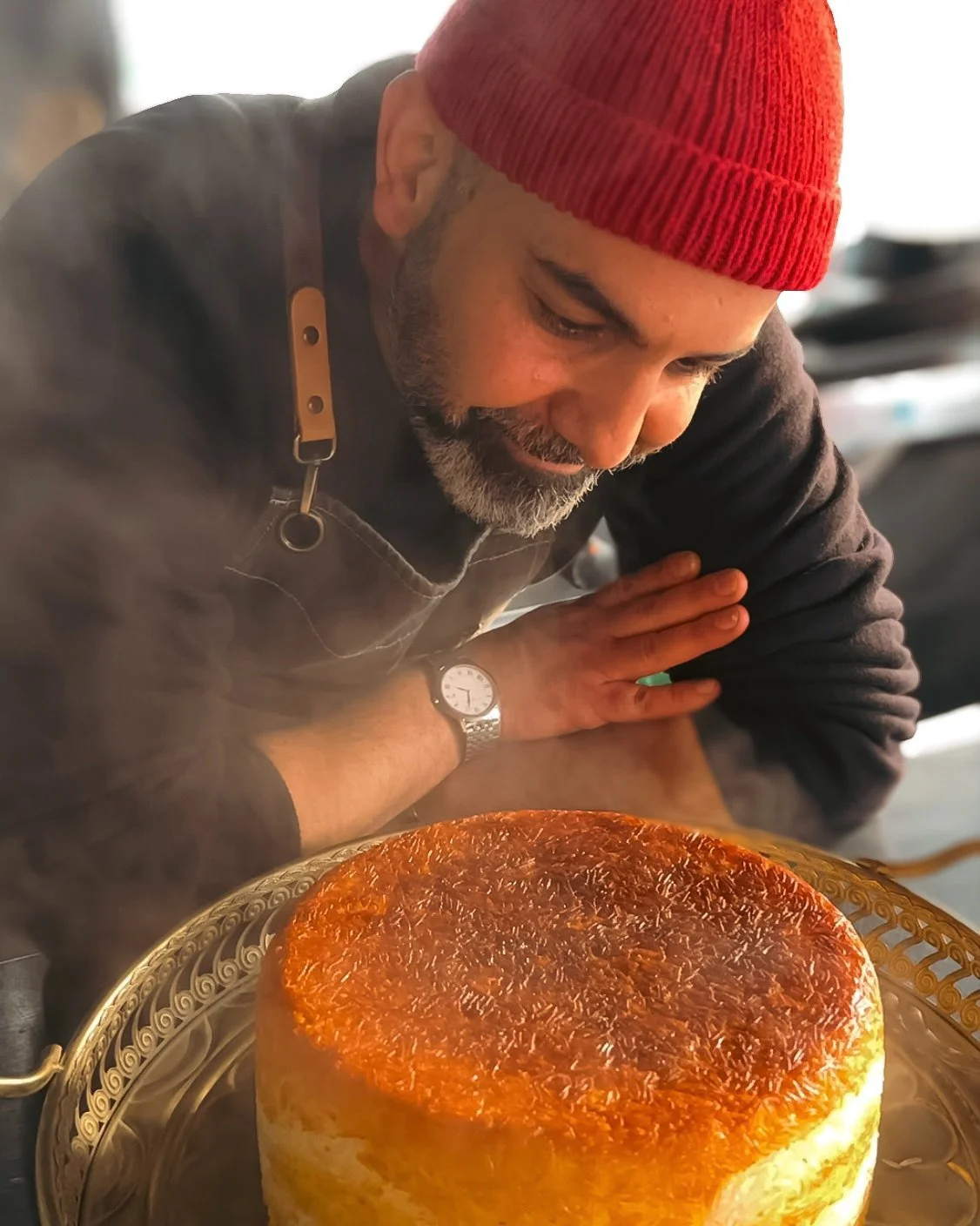
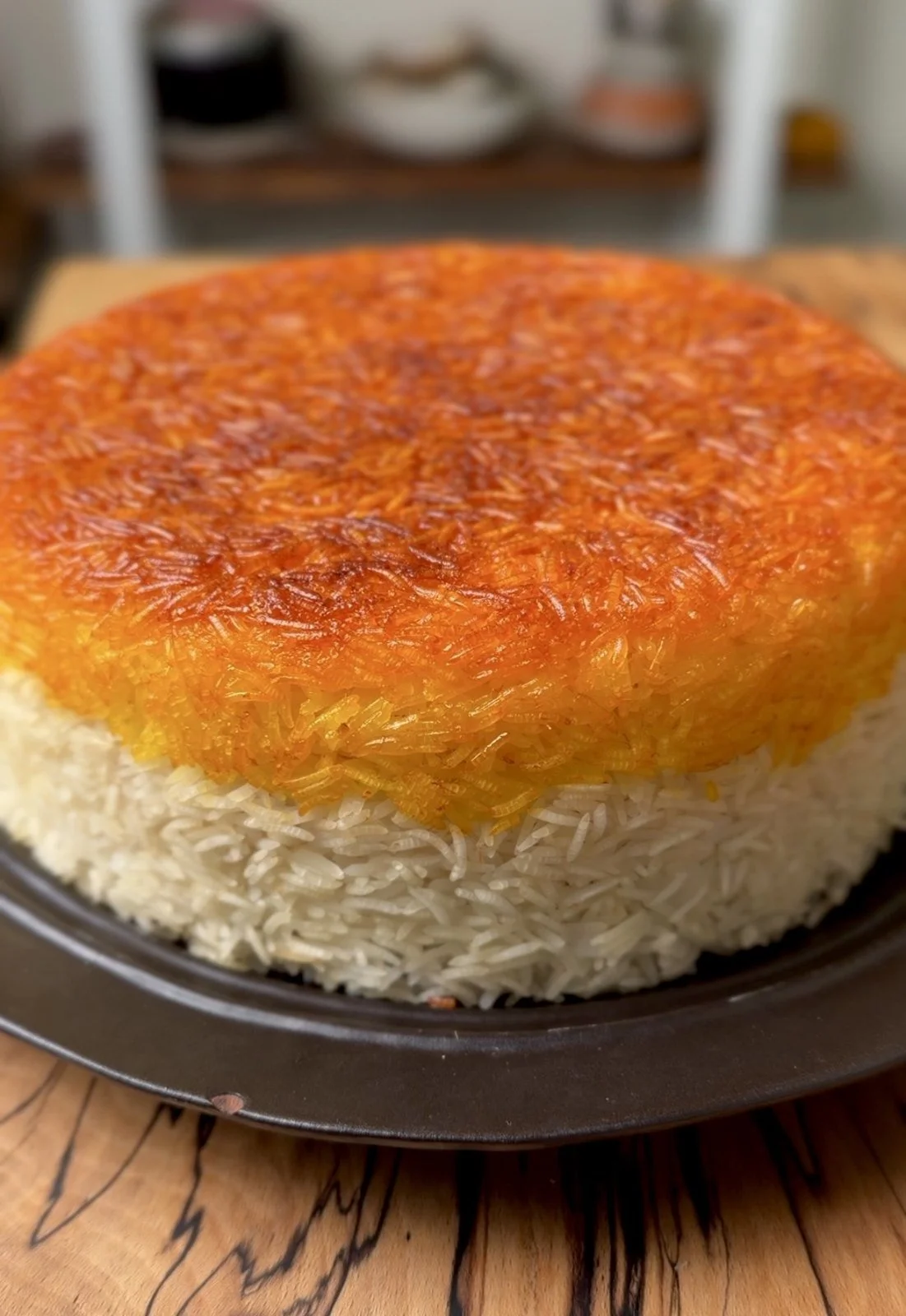
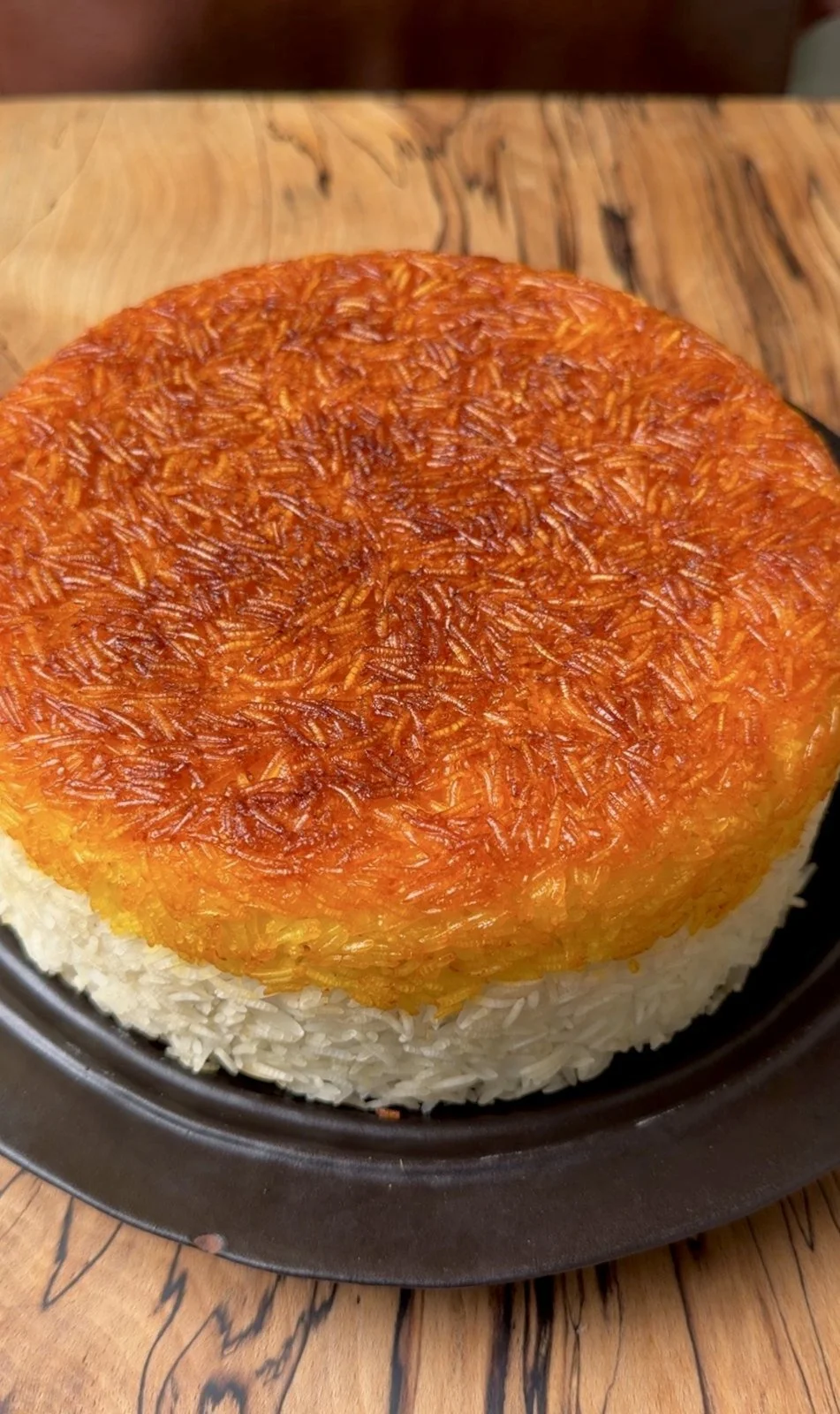
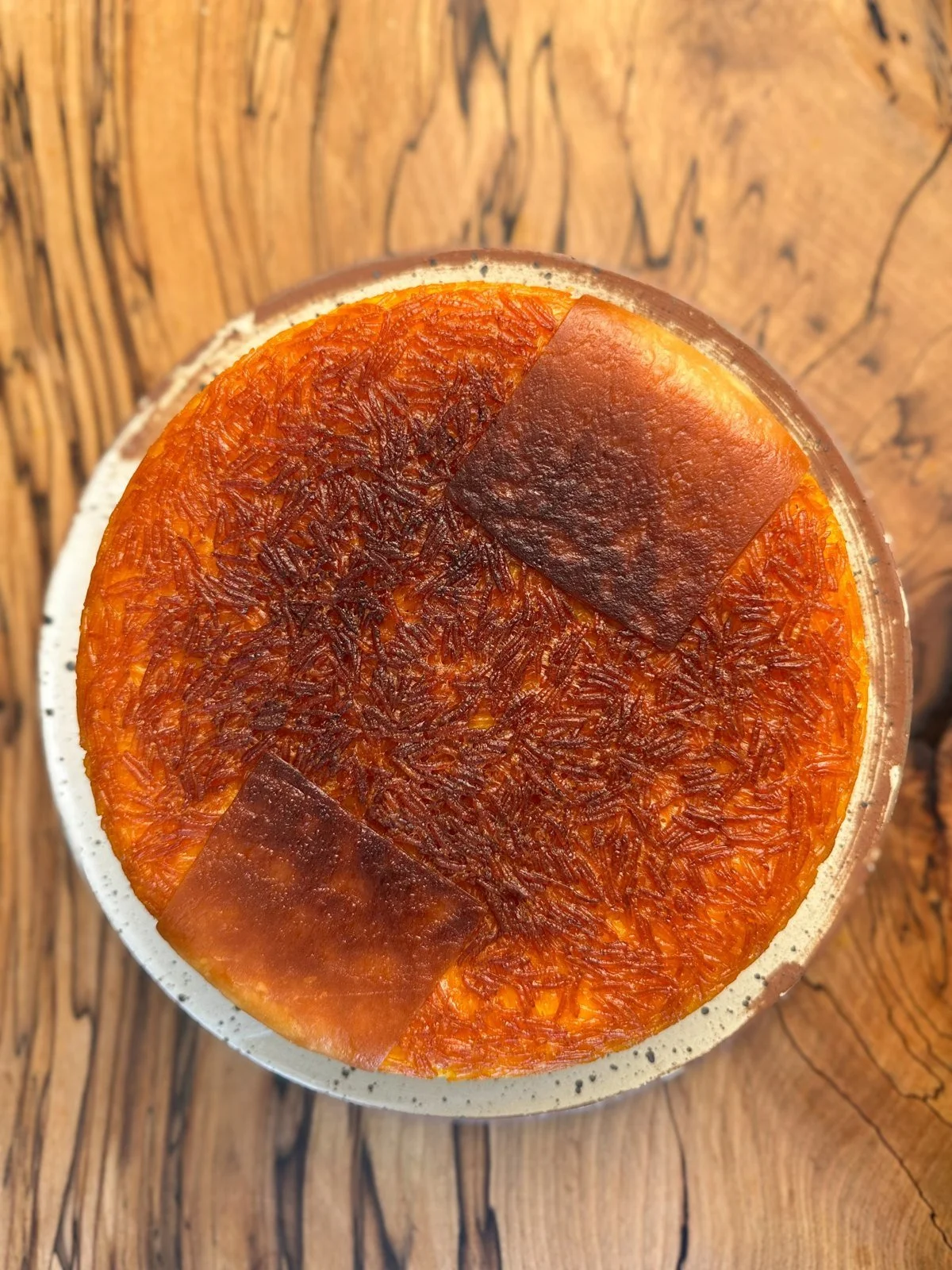
Tahdig means “the bottom of the pot”: the golden, crunchy layer of rice that forms under a pot of Persian rice. In every Iranian home it’s the first thing to disappear, and the piece everyone quietly fights over. Here’s how I make it, plus the three other tahdigs you’ll meet on a Persian table: saffron-yogurt, potato and bread.
What you need
- A good non-stick pot, about 22–24cm wide, with a tight lid. This matters more than anything else.
- A clean tea towel to wrap the lid. It soaks up the steam so the rice stays fluffy and the crust stays crisp.
- Long-grain basmati rice. I use Tilda Pure Basmati.
- Oil and/or butter, and saffron for colour.
1. Classic rice tahdig
This is the tahdig from my Polo Zaferooni (Persian saffron rice) recipe. Serves 4.
Ingredients: 400g (2 cups) basmati rice, 2 tbsp salt for the boiling water, 4 tbsp vegetable oil, ¼ tsp ground saffron bloomed on 2 ice cubes.
- Bloom the saffron. Sprinkle the ground saffron over 2 ice cubes in a glass and leave it somewhere warm to melt, ideally an hour ahead.
- Wash the rice 3–4 times in cool water, until the water runs almost clear.
- Parboil. Bring a large pot of water to the boil with 2 tbsp salt, add the rice and boil until the grains are soft outside but still have a bite in the centre: 3–7 minutes depending on your rice (about 4 for Tilda). Drain and rinse with cold water.
- Build the base. Put the non-stick pot over medium heat with 4 tbsp oil. Mix a few spoonfuls of the rice with a little saffron water and spread it over the bottom. Pile the rest of the rice on top in a loose mound.
- Make steam holes. Poke 5 or 6 holes halfway down with the handle of a wooden spoon.
- Steam. When you hear the oil sizzling or see steam rising, wrap the lid in a tea towel, close it firmly and turn the heat to low. Leave it alone for 50–55 minutes.
- Flip. Put a plate larger than the pot over the top, hold both together and turn it over in one confident move. Serve the rice with the tahdig on top, or break the crust into pieces and serve it on its own plate.
2. Saffron-yogurt tahdig
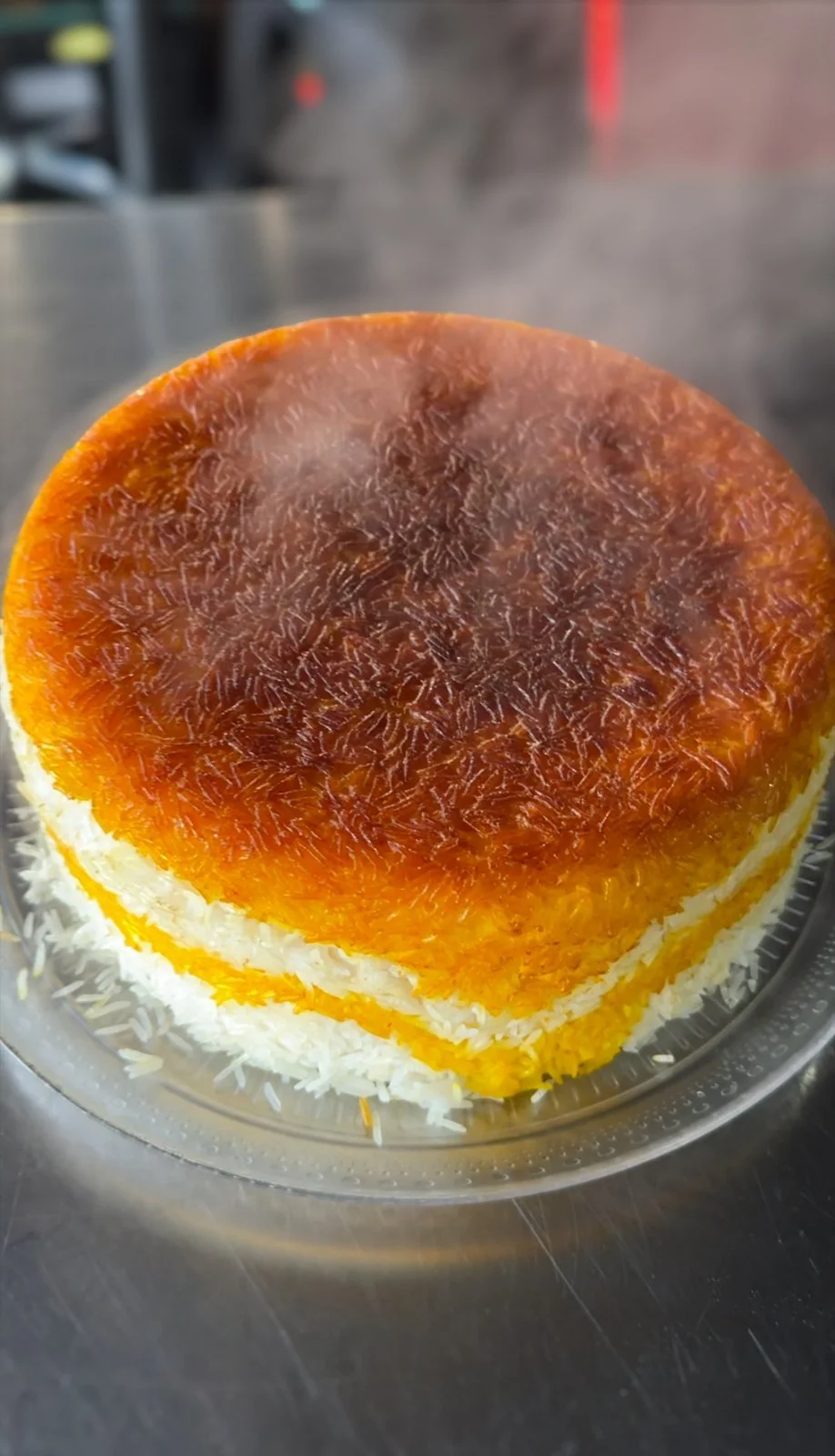
Thicker, richer and deep gold: the style used for Tahchin. Follow the classic method, but for the base mix 2 ladles of parboiled rice with 3 tbsp thick Greek yogurt, 1 egg yolk and 2 tbsp saffron water. Spread it over the oil in an even layer about 1cm thick, then add the rest of the rice. It needs the full steaming time to set and turn crisp.
3. Potato tahdig
Every child’s favourite. Peel 1–2 large potatoes and slice them into rounds about 5mm thick. Lay them in a single layer over the hot oil, season with a pinch of salt and brush with a little saffron water, then pile the rice on top and steam as above. The potatoes turn golden and crisp underneath and soft and buttery inside.
4. Bread (lavash) tahdig
The quickest and the most forgiving. Line the bottom of the oiled pot with lavash or another thin flatbread, cut to fit, brush it with saffron water and add the rice. Bread browns faster than rice, so keep the heat really low and check after 35–40 minutes.
Tahdig on every polo
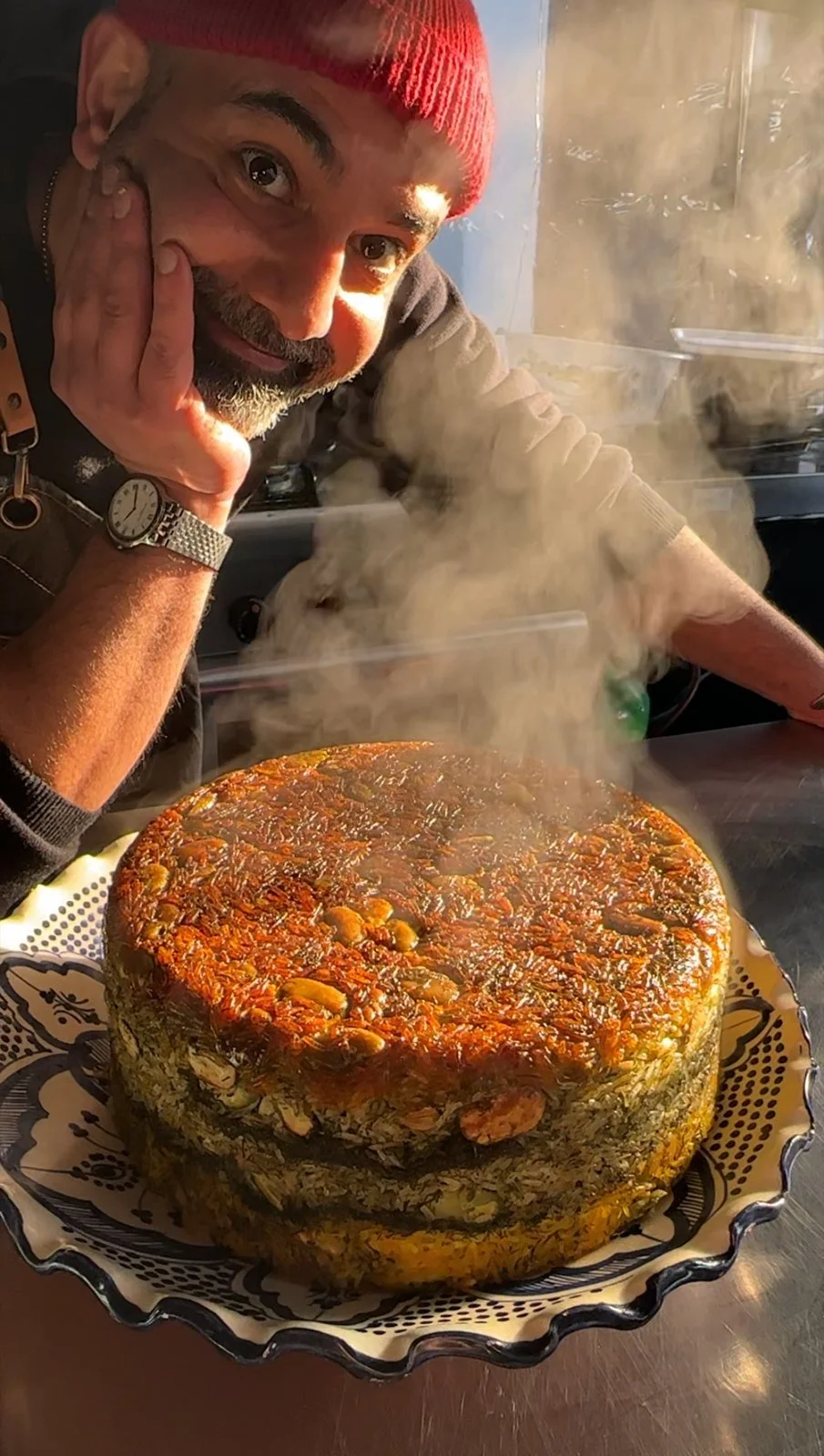
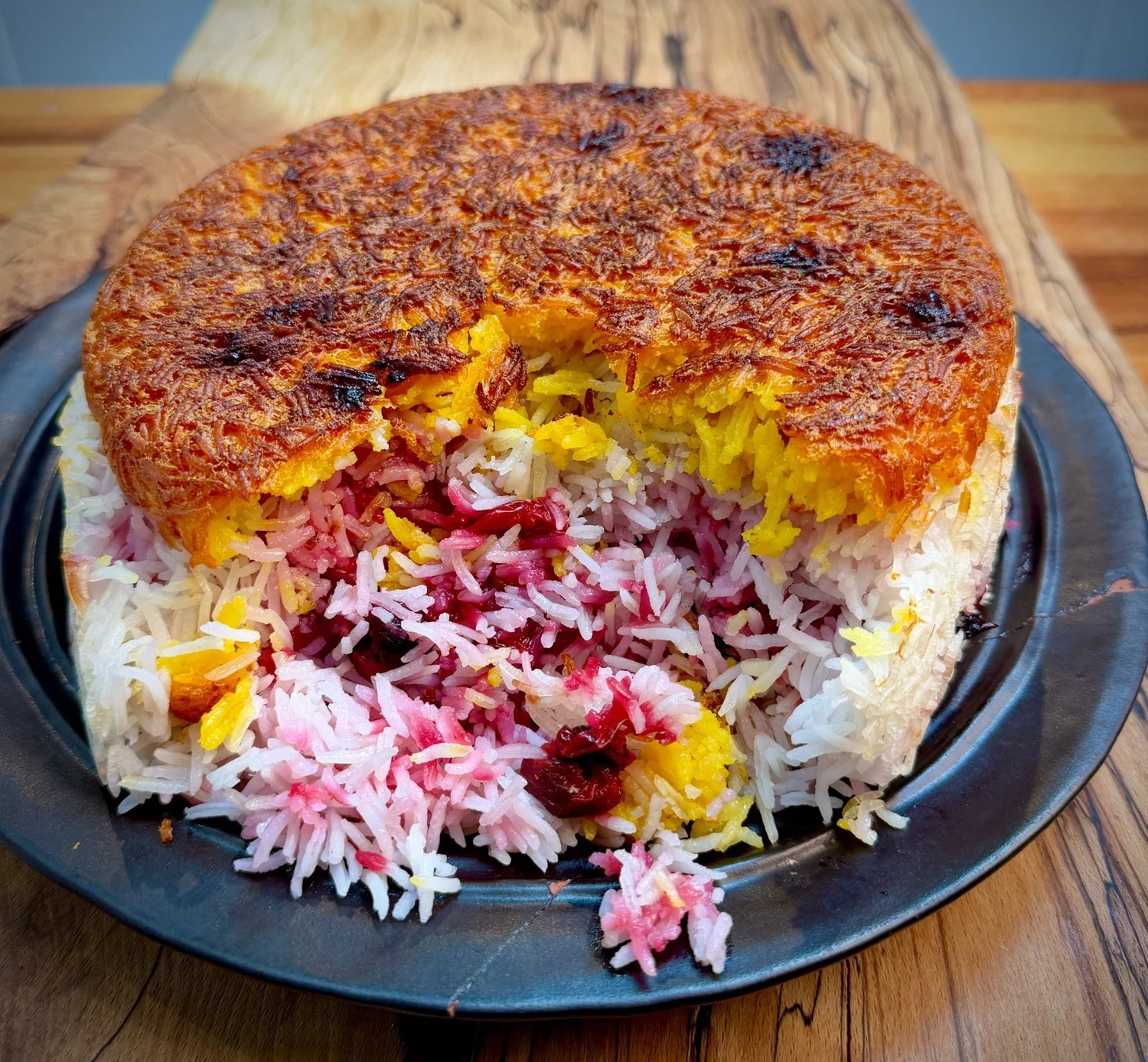
Once you’ve mastered the plain one, every Persian rice dish gets its own tahdig, and each one tastes different. Layer the flavoured rice straight onto the oiled base and the crust takes on the herbs, beans or fruit above it: dill and broad beans in Baghali Polo, sour cherries in Albaloo Polo, barberries in Zereshk Polo, herbs in Sabzi Polo. Fruit rice browns faster because of the sugar, so keep the heat a touch lower.
Tahdig troubleshooting
- Pale and soft? The heat was too low or the time too short. Next time, let the pot sizzle on medium for a few minutes longer before you turn it down, and give it the full 50–55 minutes.
- Too dark? Your lowest setting is too hot. Use your smallest burner, or put a heat diffuser under the pot.
- Stuck to the pot? Use a proper non-stick pot and don’t skimp on the oil. If it still clings, stand the closed pot on a cold, damp tea towel for 2 minutes before flipping; the steam helps release the crust.
- Rice mushy? It was parboiled too long. Drain it while there’s still a firm bite in the centre.
What to serve with tahdig
Tahdig sits next to almost every Persian main. Try it with Ghormeh Sabzi, Khoresh-e Fesenjan or Zereshk Polo ba Morgh, and a bowl of Mast o Khiar on the side.
Tahdig questions
What does tahdig mean?
In Persian, tah means bottom and dig means pot: tahdig is literally “the bottom of the pot”.
What’s the best pot for tahdig?
A heavy non-stick pot about 22–24cm wide, with a lid that fits well. The non-stick surface is what lets the crust come out in one golden piece.
Can I use butter instead of oil?
Yes, or a mix of both. Butter adds flavour but browns faster, so keep the heat a little lower. Oil on its own gives the most even, crisp crust.
Can I make tahdig ahead?
It’s best straight from the pot, while it still crackles. Leftover tahdig can be crisped again in a dry frying pan.
Maman’s Table · my online cooking course
Cook Persian rice with me, step by step
24 Persian classics filmed in my own kitchen, each with a full written recipe and Maman’s notes. One payment, yours forever.
See Maman’s TableGet my free Persian Rice Guide, plus new recipes, in your inbox.
Join Maman’s Recipe Mail