I got it from my Maman
For seven years, my mother took the bus from Tehran to Shahsavar every Wednesday night, and went back every Friday. The Chalus road takes five or six hours through the mountains, and it is not a safe road.
One night a bus on that road went down into the river. Eighteen people did not survive. The water carried my mother out and she lived.
She kept making the journey. She did that so she could be with us.
That is where the name of everything I do comes from.
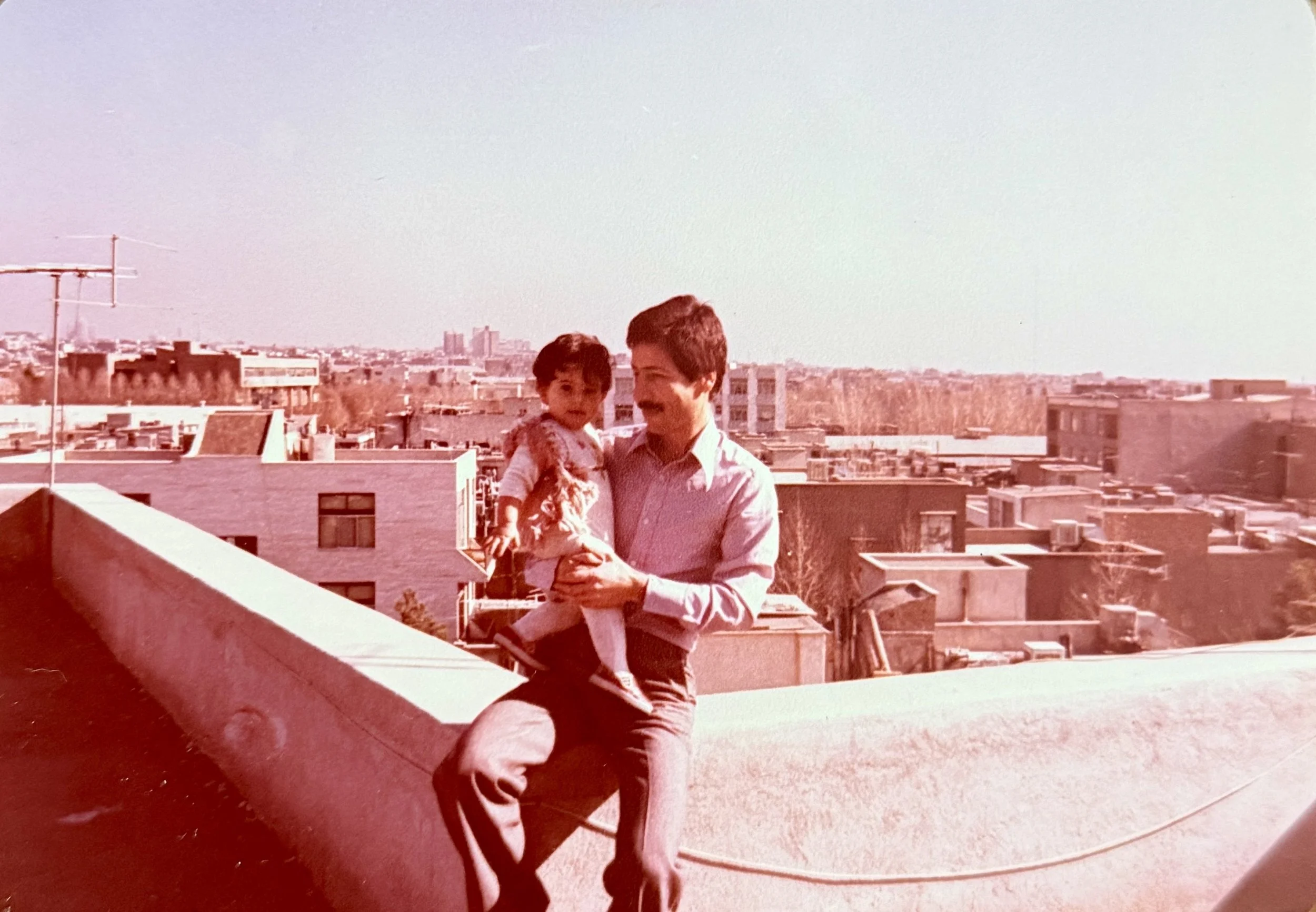
Sawdust, and kabab on the roof
I was born in Tehran in 1980, in a building on Azadi Street behind Sharif University. My father worked at the meteorological office, and when he retired he turned our storage room in the cellar into a carpentry workshop — the trade he had learned from his own father.
It was dark down there, loud, thick with sawdust. He wore a mask and was always telling me to get out because the air wasn't clean. I never did. I collected offcuts and made things out of them.
On the roof, where every family kept their water cooler, we had a small mangal. Friday was for kabab. My father always loaded one skewer with dombeh and pressed it along the others so the meat stayed juicy. From up there you could see as far as Mehrabad.
Downstairs there was a garden full of roses, and a neighbour who shouted at us to get out of it.
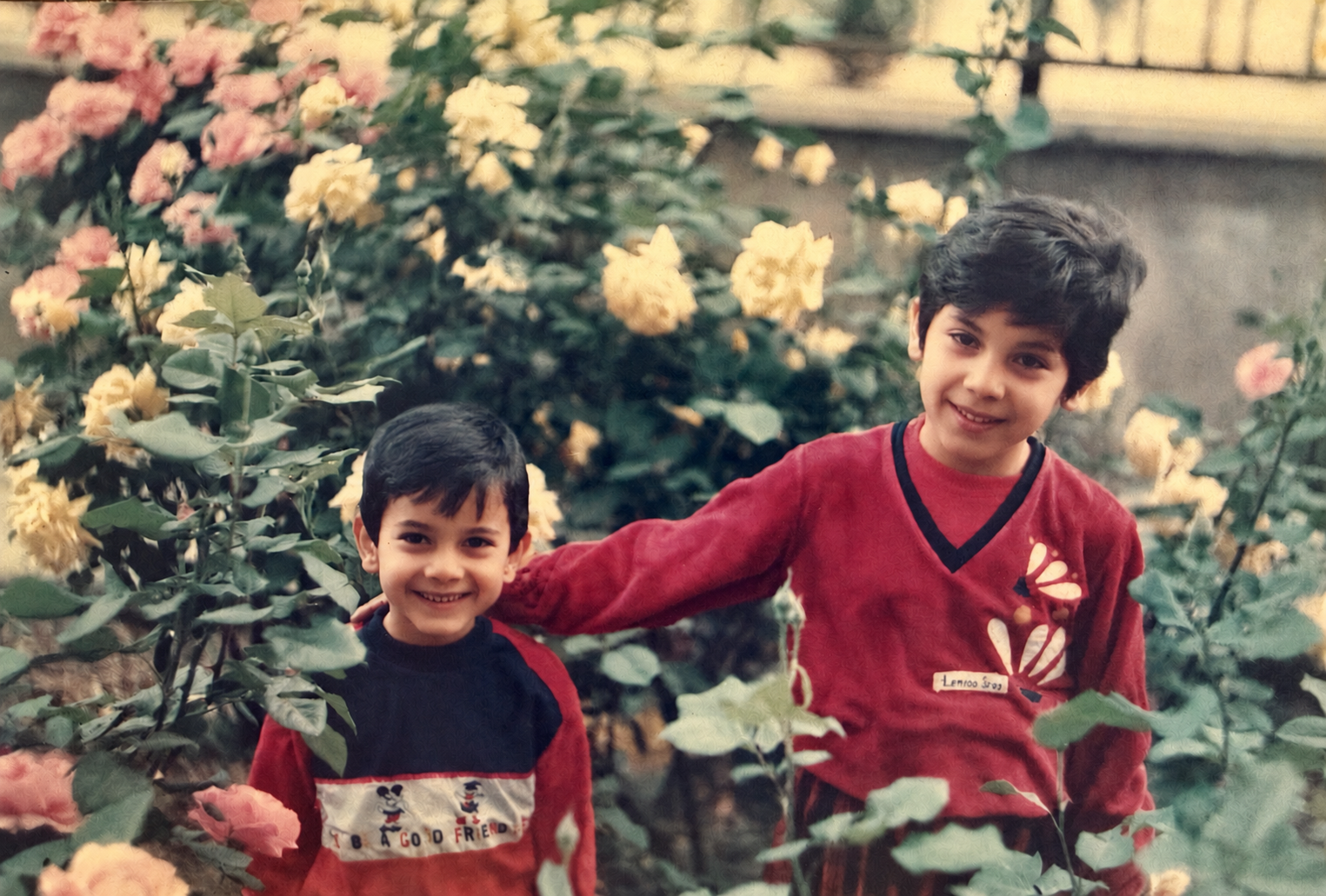
Three generations, and me in the doorway
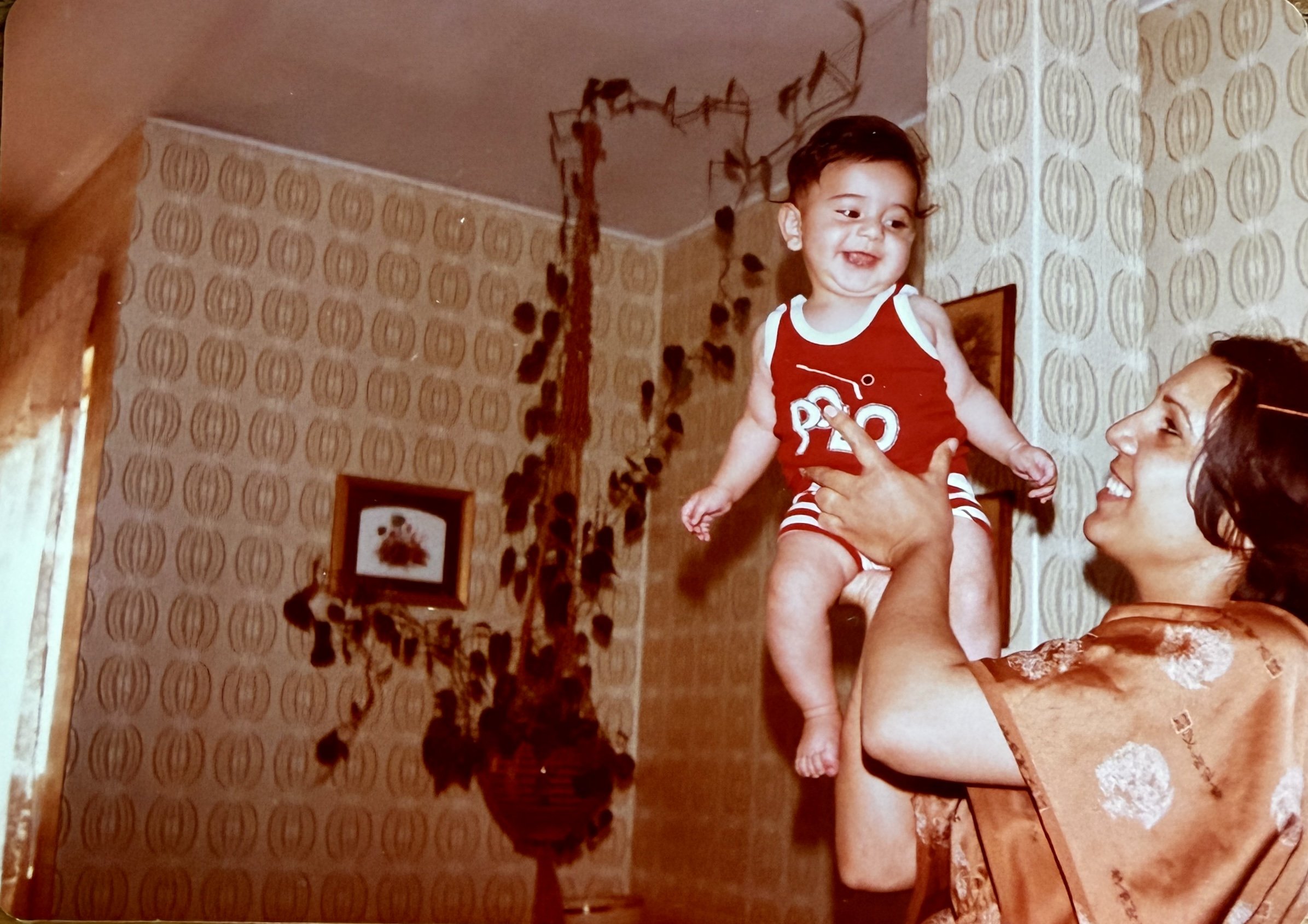
My mother left for the airport before we woke and came home at six. She was tired. She cooked anyway — for us, and for the next day, because she had to take something with her to work.
Like most Iranian households then, we had Rosa Montazemi's book on the shelf. My mother used it, but she already knew what a dish was supposed to taste like, and she made everything beautiful. Guests came constantly and they always told her so. Whatever else was difficult in that house, we never lacked at that table, and we were never badly dressed. She spent what she had on us.
When the Chalus road closed with snow and we couldn't see her for weeks, my grandmother Maman Jamileh came and stayed, sometimes for months. She had been the best cook in the family before my mother. Three generations of it, and I was the one hanging around the kitchen.
My father cooked too, and cooked well. He grew cucumbers and basil in the garden and watered them every evening.
Sahel-e Talayi
We moved to Shahsavar when I was twelve, for my father's work. It sits in Mazandaran, close enough to Gilan that the food carries both.
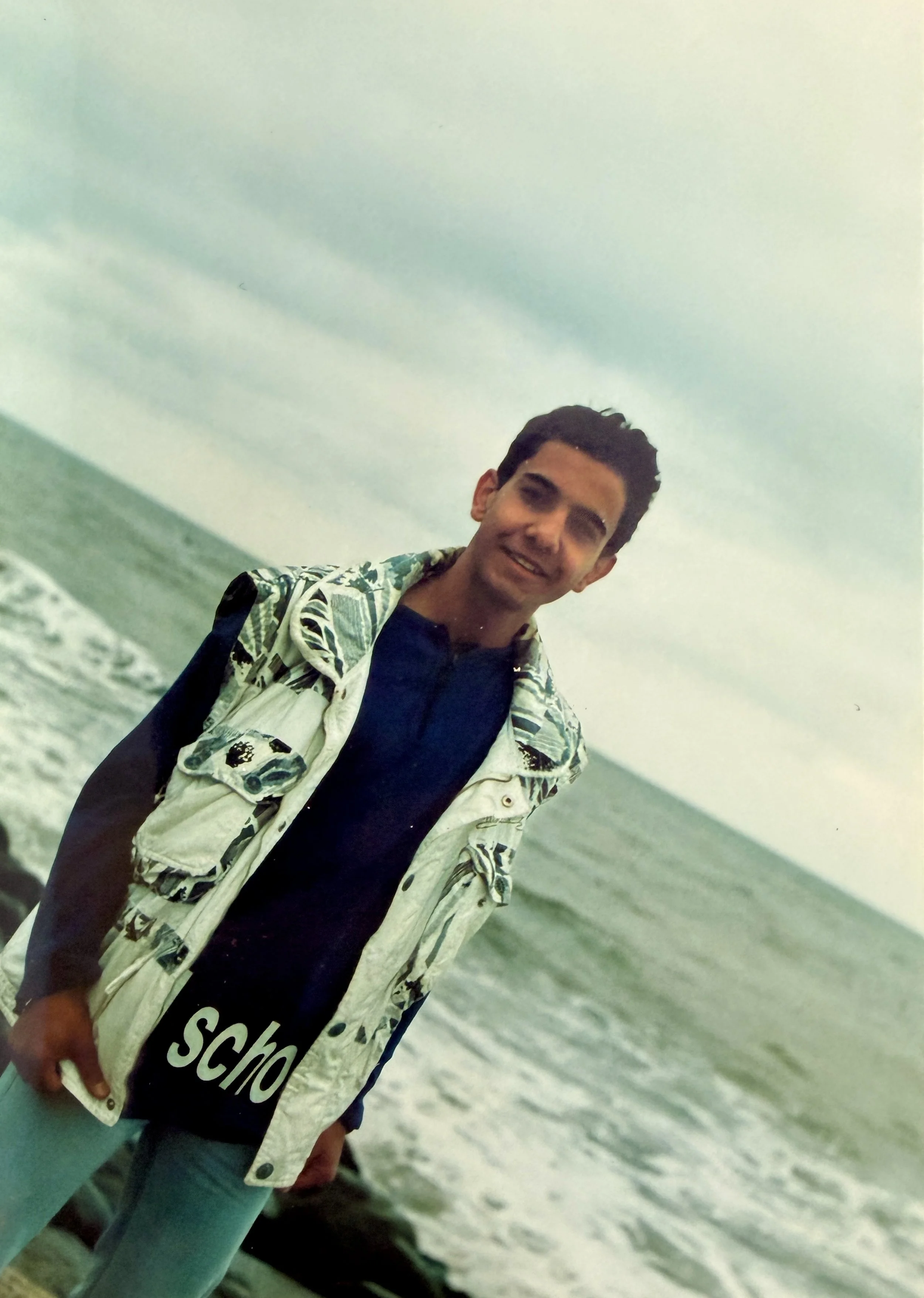
We lived in a shahrak called Sahel-e Talayi — Golden Beach. Four streets, beautiful houses down both sides, and the sea at the end of ours. We were only a few doors from the water.
I was in it constantly. I made a lale from bamboo and string, dug the garden for worms, and fished from the breakwater stones. One afternoon my father and I pulled up two kapoor on the same line. We took them home and fried them, and I have never forgotten it.
I am Tehrani. My mother is Tehrani, my father was from Mahallat. But the food I fell in love with belongs to that coast, and I never got over it. That is why I cook the way I cook.
The first thing I ever made
I passed the concours and went to Esfahan to study mechanical engineering. It wasn't what I wanted. I left before finishing.
While I was there my mother kept me fed from five hundred kilometres away. She cooked stews, froze them in small portions, and got them onto buses. I still don't fully understand how they always arrived.
Then one weekend my family came to visit, and I wanted to cook for them myself. I made zereshk polo ba morgh. I had never made it, and I had no recipe. I just remembered watching. They were surprised, and so was I.
They laughed and said yes — because they were certain I would fail.
The exam they didn't think I'd pass
I went back north and enrolled to study cooking. When I applied, I was told I couldn't attend, because the class was women and it wasn't considered acceptable for a man to be in the room.
I asked whether I could sit the exam anyway.
I took the theory paper and cooked three dishes for the examining chef. I passed at the highest grade. That certificate was the first thing I ever earned that felt like mine.
I worked in a family restaurant after that. It was hard, and my work wasn't valued there. But by then I knew what I was.
Every Monday, for three years
I left Iran because I wanted more than it was going to let me have.
When I got to England I spent three years cooking every Monday with friends for refugees. Sometimes we paid for it ourselves and went from shop to shop to find things cheap enough to feed everyone.
I have never found a better use for a kitchen.
I cook Persian food for a living. I teach it, I write it down, I host people at my table.
What I am really doing is keeping a door open — the way it was always open in our house, when the cars arrived without warning and my mother cooked for all of them.
خوش آمدیدCome in.